
Senior Living Digital Transformation
Explore senior living digital transformation strategies to improve resident care, workforce efficiency, operations, technology, and organizational growth!
8/5/20257 min read
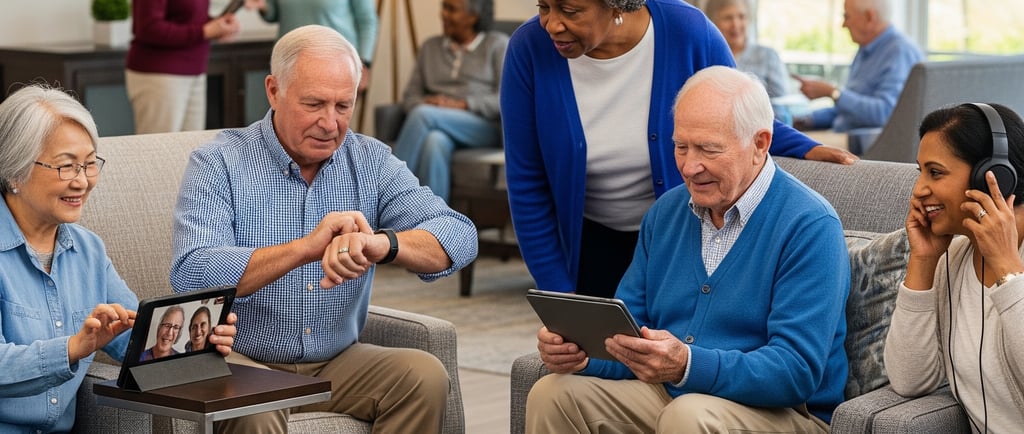
The senior living industry is at a defining moment. Demand for high-quality senior care continues to grow as populations age, but providers are also facing unprecedented challenges. Staffing shortages, rising operating costs, changing regulations, and increasing expectations from residents and their families are putting pressure on organizations of every size.
For years, many senior living communities relied on traditional operating models that focused on compliance, manual processes, and disconnected technology systems. While those approaches may have worked in the past, they are no longer enough to support the speed, efficiency, and personalized care that today's healthcare environment requires.
Innovation is no longer about simply adopting new technology. It is about creating a smarter, more connected organization that can deliver better resident experiences, empower staff, and improve financial sustainability. This is where a well-planned healthcare digital transformation strategy becomes essential.
Organizations that invest in digital innovation today are not just preparing for the future—they are building stronger operations that can adapt to whatever comes next.
Why the Senior Living Industry Is Facing a Turning Point
The challenges facing senior living providers are interconnected. Workforce shortages make it difficult to maintain quality care, while rising operational expenses reduce already tight margins. At the same time, residents expect more personalized experiences, faster communication, and technology that makes daily life easier.
Many organizations are trying to solve these problems by working harder with the same outdated systems. Unfortunately, disconnected software, paper-based workflows, and manual reporting often create more work instead of improving efficiency.
This is why healthcare digital transformation has become a business necessity rather than an optional investment.
Instead of treating technology as a standalone project, successful organizations view it as part of a broader digital transformation strategy for healthcare that aligns people, processes, and technology with long-term business goals. A strong Technology Strategy helps organizations build scalable, connected healthcare systems that support long-term growth.
The Hidden Cost of Outdated Systems
Many senior living organizations do not realize how much outdated technology affects their daily operations until they begin measuring the impact.
Disconnected systems often lead to:
Duplicate data entry across departments
Delayed communication between care teams
Manual reporting that consumes valuable staff time
Limited visibility into operational performance
Higher administrative costs
Increased compliance risks
Frustrated employees and residents
These inefficiencies may seem manageable individually, but together they create significant barriers to growth and high-quality care.
One of the biggest misconceptions is that replacing legacy systems is simply an IT upgrade. In reality, it is an opportunity to redesign workflows, eliminate unnecessary tasks, and improve decision-making across the entire organization.
A successful healthcare digital transformation roadmap focuses on solving operational challenges rather than simply introducing new technology.
Innovation Starts with Better Strategy, Not Better Software
One of the most common mistakes organizations make is purchasing new software without first identifying the problems they want to solve.
Technology alone cannot transform an organization.
Real transformation begins with a clear vision that answers important questions such as:
Are caregivers spending enough time with residents?
When nurses and caregivers spend hours completing paperwork or switching between multiple systems, they have less time to focus on resident care. Streamlining documentation and communication allows staff to dedicate more time to what matters most.
Can leadership make faster, data-driven decisions?
Access to accurate, real-time information helps leadership teams identify staffing trends, monitor occupancy, track financial performance, and respond quickly to operational challenges.
Are departments working together effectively?
Integrated systems reduce communication gaps between clinical, administrative, and operational teams, creating a more consistent experience for residents and employees.
These are the types of questions that healthcare technology consulting professionals help organizations answer before implementing new solutions.Experienced professionals combine Technology Strategy with Operational Strategy to ensure digital investments solve real business problems rather than creating new ones
How Digital Transformation Improves Resident Care
At its core, digital transformation is about improving people's lives.
Residents benefit when caregivers have access to accurate information, communication is seamless, and routine administrative work is automated.Digital tools that improve Patient Engagement also help families stay informed, strengthen communication, and build trust throughout the care journey.
For example, imagine a caregiver who needs to update a resident's care plan, communicate with another department, and document medication changes during a busy shift. If each task requires logging into different systems, valuable time is lost.
Now imagine those same tasks being completed from a single mobile platform with real-time updates available to the entire care team.
That difference directly impacts both caregiver efficiency and resident outcomes.
Organizations implementing a thoughtful healthcare digital transformation strategy often see improvements in:
Faster clinical documentation
Better care coordination
Improved resident satisfaction
Stronger communication with families
Reduced administrative burden
More informed operational decisions
The goal is not to replace human care with technology. Instead, technology should remove unnecessary barriers so caregivers can spend more meaningful time with residents.
The Growing Role of Artificial Intelligence in Senior Living
Artificial intelligence is quickly becoming an important part of modern healthcare operations.
From predictive analytics to workflow automation, AI adoption in healthcare is helping organizations make better decisions while improving efficiency.
Today, AI for hospitals and senior living communities can support:
Early identification of resident health risks
Smarter staffing and scheduling
Automated administrative tasks
Faster reporting and compliance monitoring
Real-time operational insights
However, successful AI implementation requires more than purchasing software. Organizations need a clear strategy, strong governance, and experienced healthcare AI consulting to ensure new technologies support clinical teams rather than complicate their work.Successful AI adoption also depends on preparing employees through a strong Personnel and Culture strategy that encourages continuous learning and innovation.
The most successful organizations view AI as a decision-support tool that enhances human expertise, improves operational performance, and creates better experiences for both residents and caregivers.
Building a Digital Transformation Roadmap That Delivers Results
Digital transformation does not have to happen overnight. In fact, the most successful senior living organizations focus on making steady, measurable improvements rather than attempting to replace every system at once.
A well-defined digital transformation roadmap for healthcare provides a clear direction while reducing risk and ensuring technology investments support long-term business goals.
1. Assess Your Current Digital Maturity
Start by evaluating your existing systems, workflows, and operational challenges. Identify where manual processes slow productivity, where data is duplicated, and where communication gaps affect resident care.
Understanding your current environment creates a strong foundation for future improvements.
2. Prioritize High-Impact Opportunities
Not every project needs to happen immediately. Focus first on initiatives that deliver measurable value, such as digital documentation, workflow automation, or integrated reporting.
Small improvements often create momentum for larger transformation initiatives.
3. Invest in Connected Technologies
Choosing technology that integrates across departments is essential. Connected systems allow clinical teams, administrators, and leadership to access accurate information without switching between multiple platforms.
This creates better collaboration and faster decision-making.
4. Support Your Workforce
Technology alone cannot drive transformation. Employees need proper training, ongoing communication, and leadership support to feel confident using new tools.
Organizations that invest in people alongside technology experience higher adoption rates and better long-term results.
5. Measure Success Continuously
Transformation should always be guided by measurable outcomes. Monitor key performance indicators such as staff productivity, resident satisfaction, occupancy rates, operational costs, and quality metrics.
Continuous evaluation helps organizations refine their strategy and identify new opportunities for improvement.
Five Common Mistakes Senior Living Organizations Should Avoid
Many digital transformation projects fail because organizations focus on technology instead of outcomes.
Here are five common mistakes to avoid:
Buying Technology Without a Strategy
Software should support business goals—not define them. Every technology investment should solve a specific operational challenge.
Ignoring Staff Adoption
Even the best technology cannot deliver results if employees are not properly trained or engaged throughout the implementation process.
Choosing Systems That Don't Integrate
Disconnected software creates additional work rather than improving efficiency. Prioritize platforms that support interoperability and future scalability.
Focusing Only on Cost Reduction
Reducing expenses is important, but successful transformation also improves resident experiences, employee satisfaction, and long-term organizational resilience.
Waiting Too Long to Modernize
The longer organizations rely on outdated systems, the more difficult and expensive transformation becomes. Taking proactive steps today can prevent larger operational challenges in the future.
The Future of Senior Living Will Be Driven by Innovation
Technology will continue to reshape how senior living communities deliver care, manage operations, and engage with residents.
Emerging trends include:
Artificial intelligence supporting clinical and operational decisions
Predictive analytics for proactive resident care
Mobile-first workforce solutions
Greater interoperability between healthcare systems
Enhanced resident and family engagement platforms
Data-driven performance management
Increased focus on cybersecurity and data privacy
Organizations that embrace these innovations strategically will be better prepared to respond to changing healthcare demands while creating more efficient and resilient operations.
Rather than viewing innovation as a one-time initiative, leading providers treat it as an ongoing journey of continuous improvement.
Why Strategic Partnerships Accelerate Transformation
Navigating digital transformation can be complex, especially when balancing operational priorities with resident care.
Partnering with experienced healthcare digital transformation consulting professionals helps organizations develop realistic implementation plans, evaluate technology investments, and align innovation with long-term business objectives.
From developing a comprehensive healthcare digital transformation strategy to identifying opportunities to optimize operations, strategic guidance reduces risk while helping organizations achieve measurable and sustainable results.
The right partner brings industry knowledge, technical expertise, and practical experience that supports successful transformation from planning through execution.
Final Thoughts
The senior living industry is entering a new era where innovation is no longer optional—it is essential for delivering exceptional care and building resilient organizations.
Residents expect personalized experiences. Staff need tools that simplify their work instead of adding administrative burden. Leadership teams require real-time insights to make informed decisions in an increasingly complex healthcare environment.
A thoughtful healthcare digital transformation strategy helps bring these priorities together by connecting people, processes, and technology around a shared vision of better care and operational excellence.
Organizations do not need to transform everything at once. The most successful providers begin with a clear understanding of their current challenges, prioritize high-impact improvements, and build momentum through continuous innovation.
Whether your goal is improving resident experiences, increasing workforce efficiency, strengthening financial performance, or preparing for future growth, investing in healthcare innovation consulting and modern digital solutions creates a strong foundation for long-term success.
The future of senior living belongs to organizations that are willing to adapt, embrace innovation, and continuously improve. By taking the first step today, your organization can build a smarter, more connected future that benefits residents, caregivers, and the communities you serve.
Ready to transform your senior living organization? Learn more about our healthcare digital transformation services, meet About Our Team, or Contact Our Experts to discuss a strategy tailored to your organization.
Innovation
Empowering health systems through strategic digital transformation solutions.
Support
© 2026. All rights reserved.
